J.B.Arén&Maguire
Featured image

And now I dream of becoming a good man

A legend on time, a myth about belonging

Unique biotopes of human culture

I learned to play pool as a child. A mix of vague images playing in my mind contributes to a fragmented, yet full picture.

The air was filled with excitement as the table was being unloaded from the truck. Before arriving, it had been ordered from a shop on the mainland by my father, after which it was transported to the only connecting ferry, sailed across the ocean, and finally driven along the only legal access road—an 8 km-long coastline beach—before arriving at the house.

I remember standing on everything from stools to beer crates while learning how to master the open bridge. In this unique biotope for human culture, the room—referred to as the pool room, or biljardrummet, as the Swedes now spending their holidays in Denmark would call it—had become the focal point for like-minded people, a community of sorts.

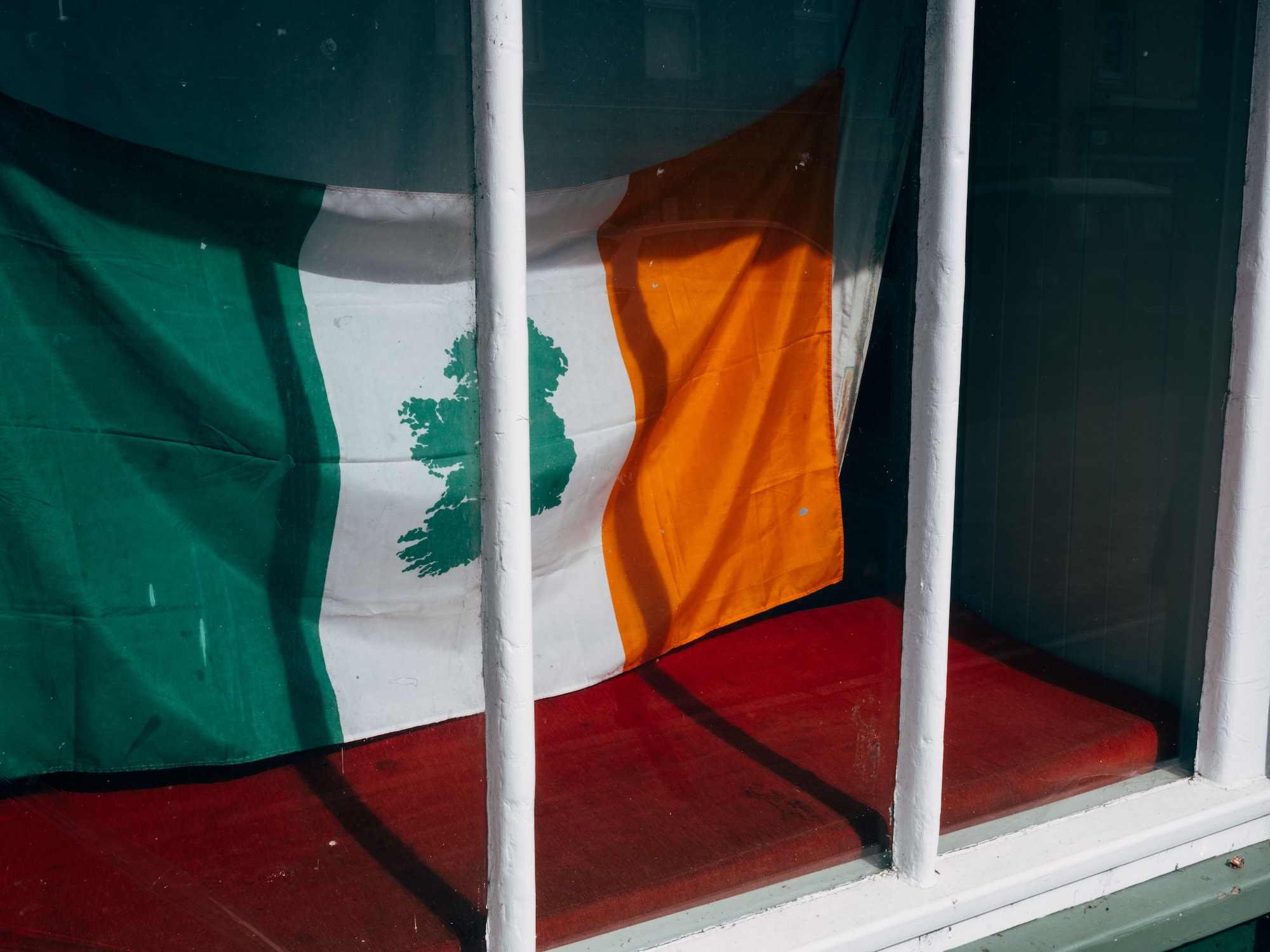
Irish flag behind bars

Une coupe de libération

Last year I went to Ireland with my partner. For my birthday, she had gifted me a trip to her mother’s home country. We planned a round trip to visit both of her aunts, the one uncle, and Granny, who, after sharing a life with her late husband, was now living alone in a small nursing home.

After being told stories about her mother’s side of the family—their upbringing in a 60s Belfast, heavily influenced by political, religious, and social tensions—and tales of untamed landscapes that places like these so unapologetically exude, I was eager to get to know my partner’s Irish heritage better.

Despite the fact that the weather gods had bestowed a grey and—let’s say—humid day, straight out of my closest cultural reference (a British whodunnit*), upon us, a fatal attraction*, now turned ambition to create a tribe of my own, fuelled my astonishment as I carefully observed the landscape coming in for landing.

As we enter the driveway to our second destination—tea at Granny’s nursing home—my shoulders start to fall back into place. With a firm hand, the drive along the small country roads and rolling landscapes, inhabited by the innumerable sheep playing a crucial part in Irish economy and identity, had slowly rocked me into a more relaxed state of mind.

Not that our first destination—dinner and sleepover at Auntie Yvonne’s in Port Rush—had made me anxious; quite the opposite. Her warm welcome, initiated by a firm hug, had made me feel at home. And even though the mixed scent of peat* and slightly synthetic diffuser had put me on alert, we had arrived, and our trip around Emerald Island was just beginning. The not-yet-present lighthearted ease one might associate with voluntary travel might have had something to do with the fact that my pre-consumed idea of what a small Irish naval town looked like (even though we had entered British territory for the evening) had been confronted, as I recognised the eerie dictation of globalised tourism and seasonal gentrification*.

As we walked up to the main door of the nursing home, an elderly—yet not “granny-old”—man recognised our arrival. What we initially thought to be a slightly silent greeting, accompanied by a mute facial expression a couple of inches inside what some would call one’s personal space, later revealed itself to have been une coupe de libération. He had perfected his non-suspicious “slow quick walk” in order to time us as we were buzzed in through the now-locked front door—that, up until his successful breakout the previous weekend, had been open. As we learned more about his backstory, the persistent pursuit of freedom made me smile and instilled a sense of hope in me.

Granny’s room was full of light, coming from a precisely curated handful of artificial sources and the big window facing the open green area behind the nursing home. It was tidy and felt warm and cosy. Her dresser stood at the far end of the room, decorated with tokens in different forms—testament to a life, her life, her time.

As I sat there, the concept of time was transforming in real time. What had only been a theoretical conclusion up until that day now manifested its presence physically. I left our afternoon tea appointment a new man, with an ambition to persevere in directing my focus on what I had come to conclude was of most importance to me.

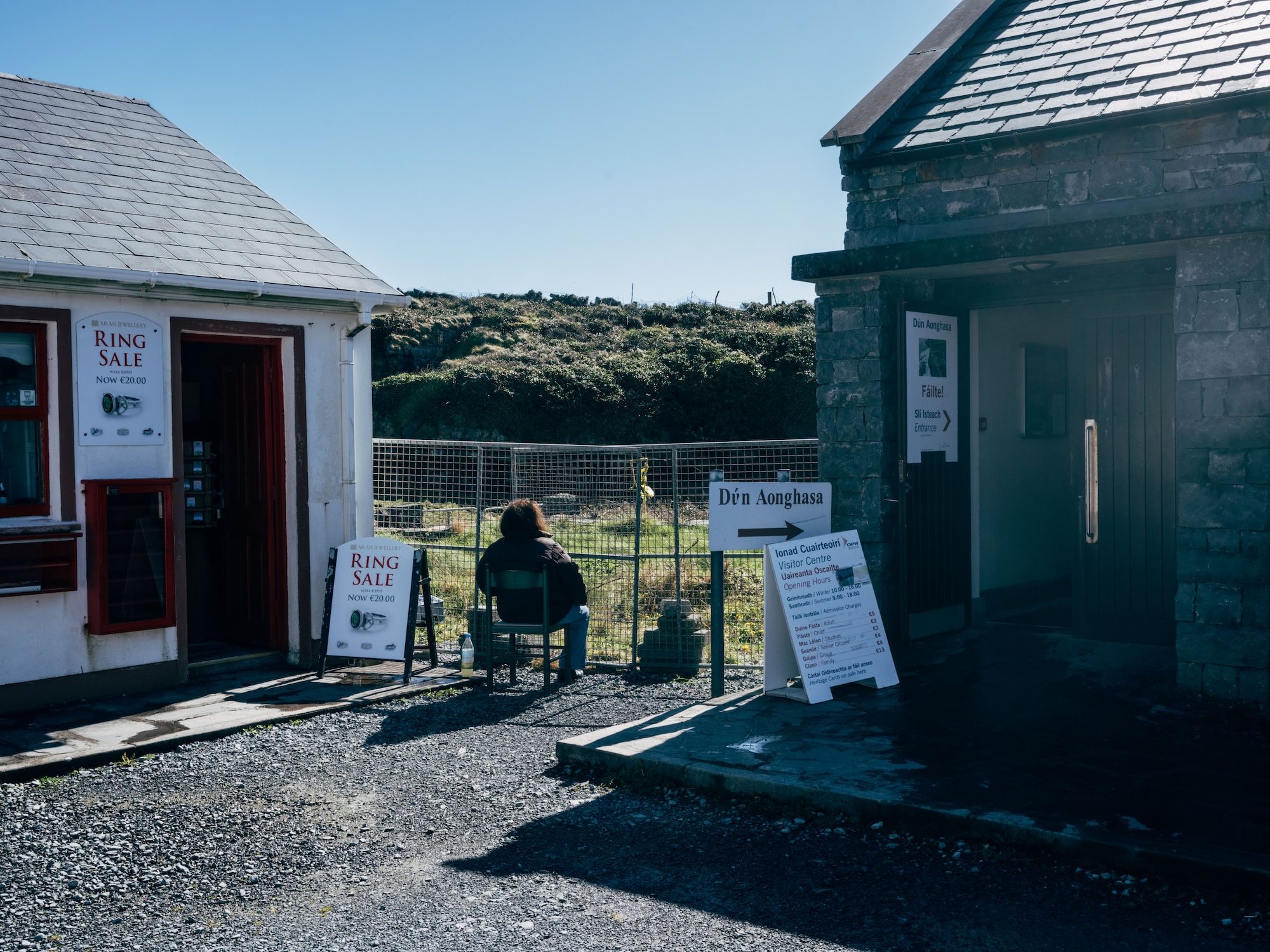
Irish visitor center

Uisce Beatha

Murphy’s Bar, Castlemaine. Co. Kerry. For generations, the owner and their relatives had operated the bar and farmhouse. Further down the road, you could find the Anvil Bar, operated by... someone else. We were going for the gastropub experience with the most authenticity.

Our so-called great intuition, shaped by what we would have liked to think of as a perfectly solid frame of reference, combined with an on-the-verge hangriness, had led us to this “straight-out-of-the-oven frozen pizza, served in the step-up backroom serving as a gaming/dining area” establishment, whose inviting atmosphere had been heightened with a fake fire, housed in the old retired fireplace.

“I’ve heard Bushmills should be really good, is there a specific one you could recommend?” My intuition, which “shatteredness” had not yet settled in, could clearly sense what could only be described as a “whiskey misstep”.

Despite the fact that the 1405 Annals of Clonmacnoise plays a key, if not the definitive, role in cementing Irish whiskey's birthright to claim its place as the original whiskey—and its people, the Irish, as its founding fathers—most writings suggest that both Ireland and Scotland likely developed whiskey independently, each drawing from the common distillation knowledge brought to their shores by monks and traders. However, this part of the story was left out in the “Powers vs. Bushmills”* elucidation that followed. Maybe—this was actually the real authenticity that we were looking for all along.

Pay me, Pet them

Somewhere along the way—before arriving at Murphy’s Farmhouse—we took a right turn down a winding road, whose magnetic field had made us U-ey¹ a couple of hundred meters down the main road.

As we embarked on what felt like a side quest to the main mission, we were greeted by a group of free-roaming sheep. Their complete disregard for the automotive directions guider was a testament to the raw force radiating from the out-of-this-world backdrop of a landscape that they inhabited. The briefing of the side quest had been brief, if non-existent. Our synchronised awe and unspoken agreement for this enchanting right turn had left us standing in the middle of this incredible scenery, not knowing what to do next, but with a gut feeling telling us that this had to be examined further.

During our round trip, my partner had sporadically been yelling out “sheep” or “sheep-sheep” as she spotted the furry cultural markers from the car window, often sprayed with a distinctive colour to be recognised. Her general passion for animals was fuelling an ambition of finding a sheep to befriend along the way—her Irish sheep friend.

The increasing number of potential friends emerging around us, as we were driving along this scenic offspring of Bunowen and Killary Fjord, was building up to a potential resolution for why we had embarked on the side quest.

Pet and Pay! As we were approaching the end of the rainbow, the letters, written in capital letters with a big marker—imagine a sign from the local grocer whose great deal you should not miss—had a signalling value that could have been perfectly aligned with the rugged, DIY approach we were looking for, if its undeniable interdependence with the too-tailored sign on the main house had not existed. It came as a soft but persistent slap in the face.

The rather small parking lot was somewhat torn, gravel-wise, gladly testifying to the exact amount of pay-and-petters who had come to pet. The side quest’s sudden ending might have been most disappointing to my partner at first, but the newly founded anti–Pet and Pay alliance had boosted my motivation in supporting her dreams of a consensual furry friendship.

Authenticated authenticity

Set in a slope, in the middle of a sheep field, Murphy’s Farmhouse ticked all of the boxes with its warm and homely interiors. We had been getting clear instructions on a lot of things: dos, don’ts and hows—something we’re both used to, having spent a lot of time in old houses where most modernities one connects with the latter half of this never-ending, accelerating Anthropocene had yet to announce their arrival.

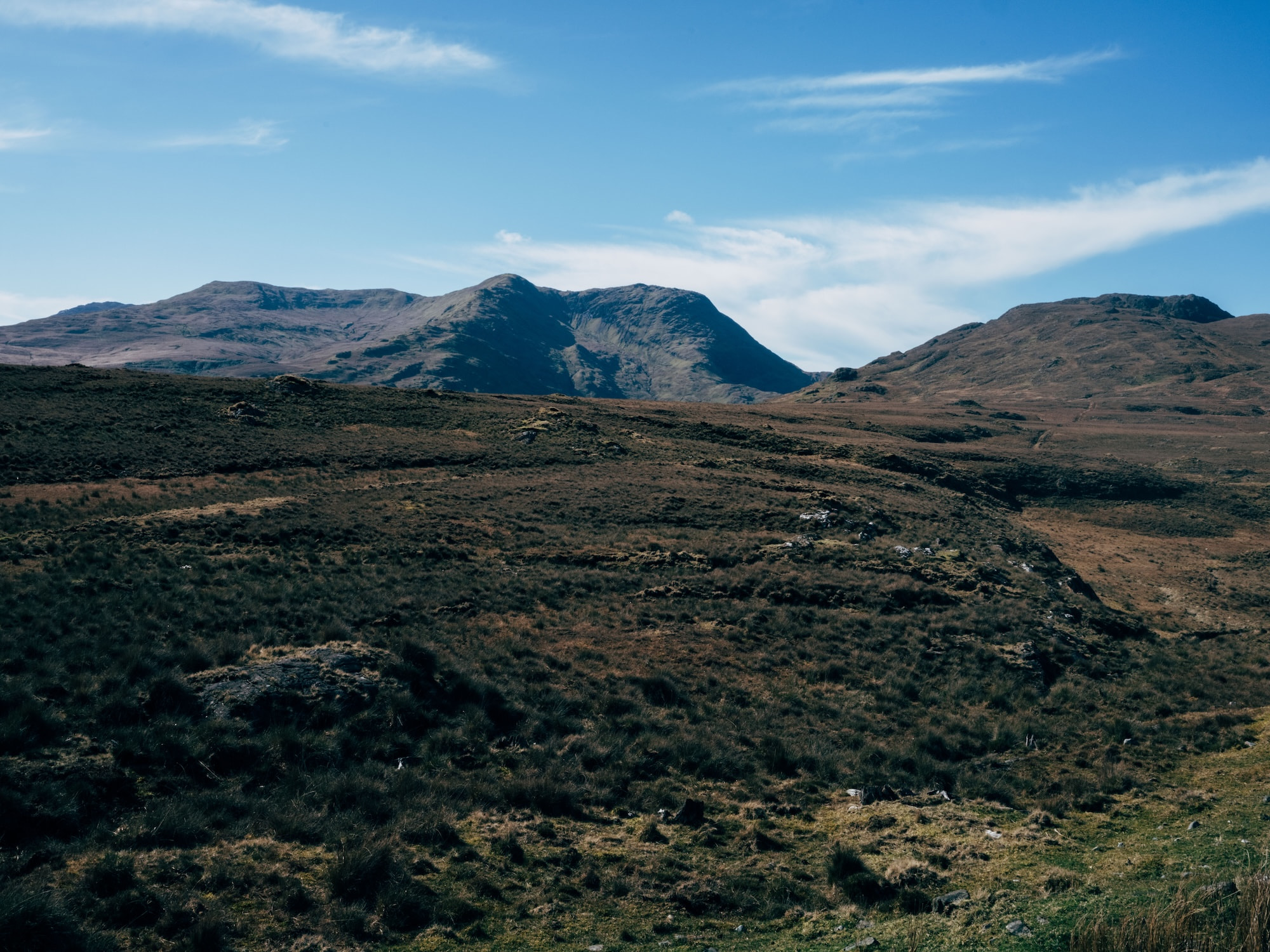
Waking up, I could feel the sun on the right side of my face. As I turned my head to get full facial exposure, the view from our little corner window presented a perfect peek down at the field where local sheep were stretching their morning limbs. Leaning closer, I could glimpse a spectacular mountain range, whose base came as an extension to the sheep’s enclosure.

Forty minutes after starting to plan our first side quest of the day, my other half was waking up. Her rising had been timed to perfection, as it aligned with my switching of the heat switch approximately thirty-five minutes prior to that. On arrival, we had been given clear instructions on how to proceed for a successful warm water outcome: “The water heater needs 30 minutes to warm up. You will find the switch for the heater next to the light switch, next to the bed in your room.” An hour after being switched, a conclusion was made—we were going in heatless.

Breakfast was okay. As we were packing our things into the car, I presented the idea of a mountain range morning walk. My pitch was well received, and we took a left turn, going further up the road to find a spot where we could enter the mountain base.

The absence of everyday life's soundscape made its presence clear as our senses calibrated with each step uphill. As if by consent of Murphy’s Slopes’ guarding mountain, my nostrils expanded, allowing me to experience all the intricate details of the landscape through my olfactory sense. The well-known therapeutic effect of the often underappreciated practice of 'nature wandering' manifested itself as my eyes rested on nothing but a rolling landscape of organic matter. Somewhere a couple of hundred meters higher up the mountain ridge, we quietly acknowledged the mighty powers of U-eys and left turns before turning around to head back down.

Driving back down the narrow gravel road that had led us to our morning walk, we could glimpse parts of houses and their associated land—which, on our way up, had only been visible to rear-view mirror observers. Coming up on the last turn leading us to the main road, we passed an old stone barn. Behind it, there was an enclosure, and inside it—furry friends, lots of them, in all shapes, forms, and sizes. I could hear how my partner’s breathing stopped, and as we were entering the turn, I said something along the lines of, “This might be where you find your consensual furry friendship.”

Despite sensing the importance of making sure we hit the road in time to arrive at Auntie No. 2's on schedule, her sudden outburst of “turn around” didn’t come as a surprise as we were slowing down to take a left onto the main road.

Pulling in to the side of the road, J. Buckley appeared around the corner of the barn. With his sixpence, cane, trailer “yoke,” rubber dollies, waxie and cords—he was the reincarnation of the Irish shepherd’s slightly more sophisticated version of the “Ibiza final boss.” We had barely finished our greeting sentence, whose animal-greeting essence was more or less shining from our lit-up faces, when he welcomed us with open arms—“Come around the other side, there are ducks, sheep, horses and dogs.”

The slightly windblown and humid weather conditions, combined with a turned-off heating system due to overdue payment, had not hindered Archie the horse and a goat—whose name I have now forgotten—from building up an impressive heat inside the closed-off far end of the barn, serving as their shared home. A half door allowed Archie to inspect his new visitors as they arrived; the goat, on the other hand, had a harder time looking over the bottom half. Rest assured, he need not worry, since our well-mannered nature instinctively led us to come a bit closer and lean over, ensuring his slight cross-eyed gaze that we had come in peace.

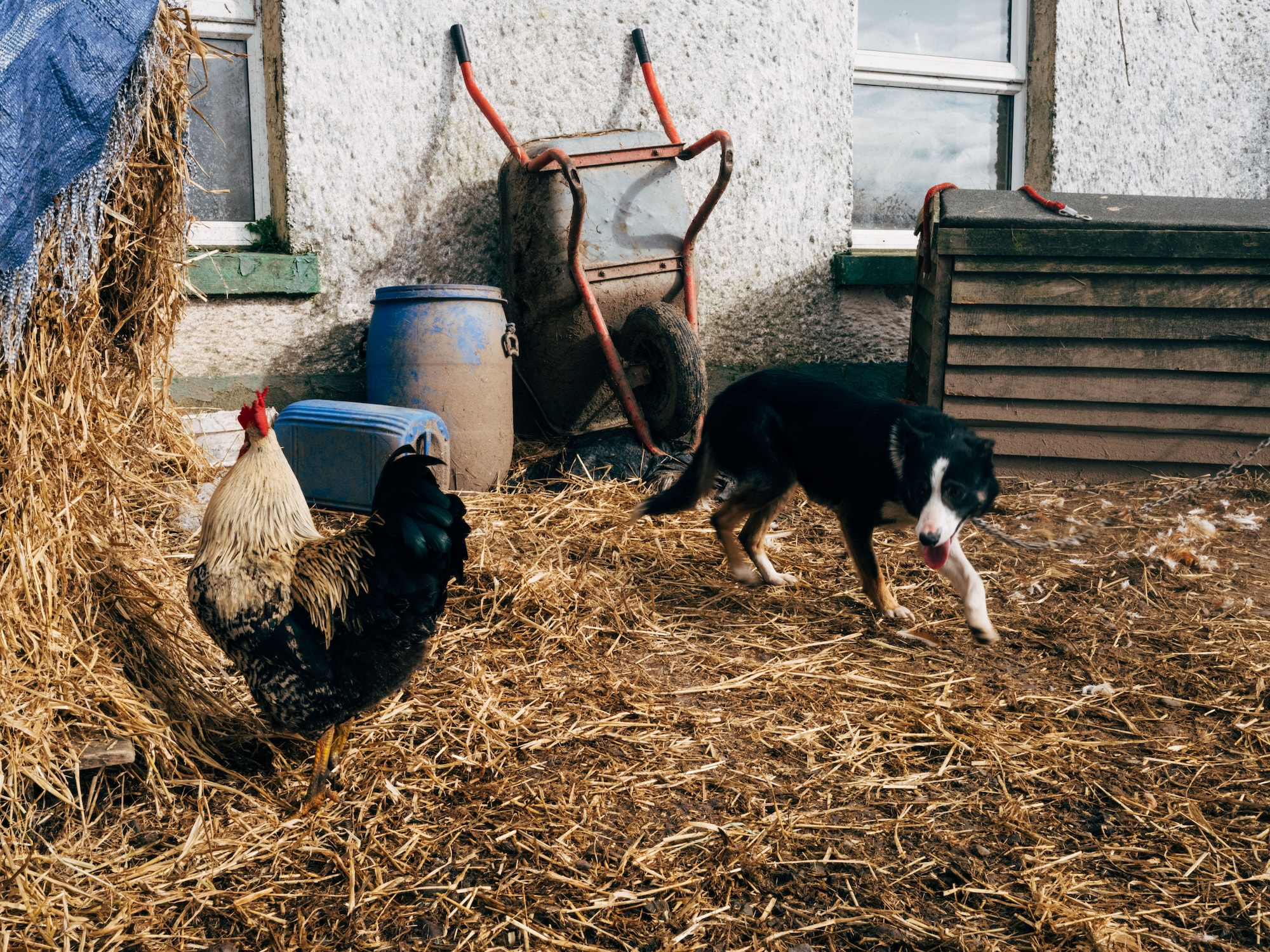
Even though Archie and the goat had caught our immediate attention, our focus—now shifting towards the flock of sheep in the background—quickly got interrupted by three herding dogs linked up in chains to their individual small dog houses made out of old barrels and planks. The way their posture instantly shifted into a half-lying side position when approached testified to a submission neither my partner nor I had ever related to man’s best friend before. As if their living standards and total submission were not evidence enough, the way we were offered one of them—due to the fact that it didn’t perform well enough in the field—underlined that their existence here filled a function. And it was not to be pet, not even when paid for.

After spending about an hour together with everything from horses and goats to herding dogs, sheep, ducks and hens, we were now ready to go. If we had originally come for the furry friends, we were definitely leaving for man’s best friend.


Small town boy

Entering what could best be described as a coda—or perhaps a third act for those more accustomed to the world of classical drama—to this cantata of direction, it became clear to me why this had become Auntie No. 2’s chosen otium.

Their newly built house lay on a piece of land along the coastline between Cork and the local town of Goleen. The ride in took us through narrow bends over small creeks, with sandstone cliffs sharpened to razor by the magnificent Celtic ocean—and dense flora constantly present. The first thing one noticed walking into their home was the living room window, serving as a shelter from—and panoramic view of—the vast ocean outside, swallowing the hills in between whole.

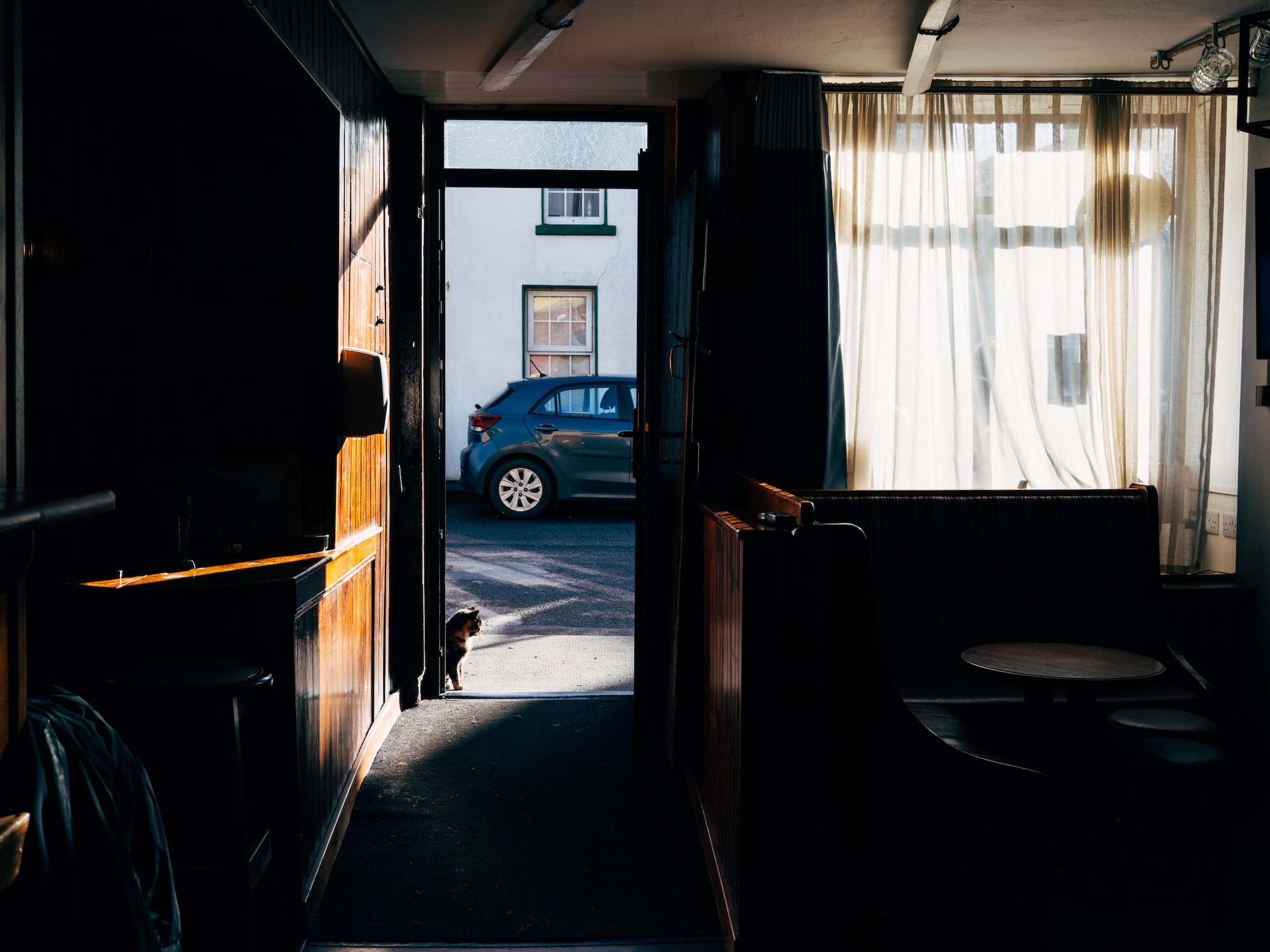
We spent the last days of our trip getting to know the local area by going to markets, fishing spots, skinny dipping, and hanging out by the house. For our last night, we had been invited out for beers at the local pub, Denny O’Meara’s. Despite the fact that its previous owner and hostess had just passed away due to some unfortunate, unforeseen circumstances, one could still sense the warm and inviting atmosphere we had heard rumours about when visiting O’Loclainn’s Bar in Ballyvaughan some days before. The locals were honouring her and the establishment by doing what they had always been doing—hanging out, or “ag crochadh amach,” as they would call it.

We seated ourselves on the corner—and partially sunny—side of R591 and Ballydivlin to enjoy the last bits of afternoon sun, hanging on to the ridge of the traditional terrace houses on the other side of the road. We were joined by a couple they had become friends with and emptied our first glass, perfectly synchronised to the sun finally letting go. Most of the customers abided by the standing custom, which made it surprisingly easy to find a seat, even though the crowd was slowly increasing.

From my seat at the corner table by the entrance, I could keep a close eye on the game of pool unfolding in the room across from ours. The way the two gentlemen carried themselves confirmed the partial assumption I had begun to make—that this was their unique biotope—based on overhearing fragments of their conversation as we passed them setting up the game on our way in.

Keeping up with the ongoing conversation at our table became increasingly harder as my focus on the fellow “poolers” grew. At one point, my curiosity stopped being containable, and I stood up with decisiveness and announced I was going to have a look at the game taking place in the other room. As I entered the biotope—whose uniqueness felt familiar—I was greeted with open arms. I introduced myself to both of them, but could only remember one name: Liam. As conspired, both of them had local ties. The other, whose previous generations had lived in Goleen, now used it primarily for vacation as his employment drew him elsewhere. It was harder to tell with Liam—I got the sense he might not be working anymore, and despite any other potential residential affiliation, most of his time was spent here.

Both of them were good players, but there was no doubt Liam had the upper hand most of the game. As the game was closing in, they offered me a chance to play against the winner—a normal courtesy for anyone accustomed to the gentlepersons’ pool code of conduct. Pint glasses were filled up, and my inauguration was now set into motion. The other had taken a seat by the bar, but not so far away as to prevent him from keeping a close eye on the new prospect’s abilities.

The first thing I noticed was the surprisingly straight nature of the tips on the otherwise pub-torn pool cues, making it possible to actually shoot straight. This might be taken for granted by anyone who made it this far, pool experience or not. For me, however, this had become a rare commodity, as cue tips in my own natural pool habitat frequently had to be changed as a result of the many outsiders merely passing by—often not taking the responsibility of mounting new tips properly, reflecting a lack of knowledge of this seemingly small detail’s ability to severely affect the outcome of a potential game—leaving them skewed.

Years of seasonal experience in analysing everything from the constantly sandy tarmac to skewed tips, in order to properly calculate these factors’ impact on the angle-impact equation, quickly revealed me to both Liam and the other—still sitting within detailed observational reach—as a possible pool wolf in “sheep-sheep” clothing.

Losing on purpose is not my thing, but I can’t exclude that me pocketing the 8 ball in the wrong hole might have been the result of some reckless decision-making on my end—a possible subconscious result, exponentially growing in relation to the home team’s growing “silent focus.” Not saying this was the case, however—if it had been, I feel like it would be understandable, taking into consideration the risk of being excluded before actually being included.

As I prepared to depart with the rest of my company—who were now ready to go home for dinner—Liam leaned over the pool table, exuding a blend of relief and confidence, the latter surely born out of the empowered feeling of belonging that only a local community like Goleen can instill—“Good man.”